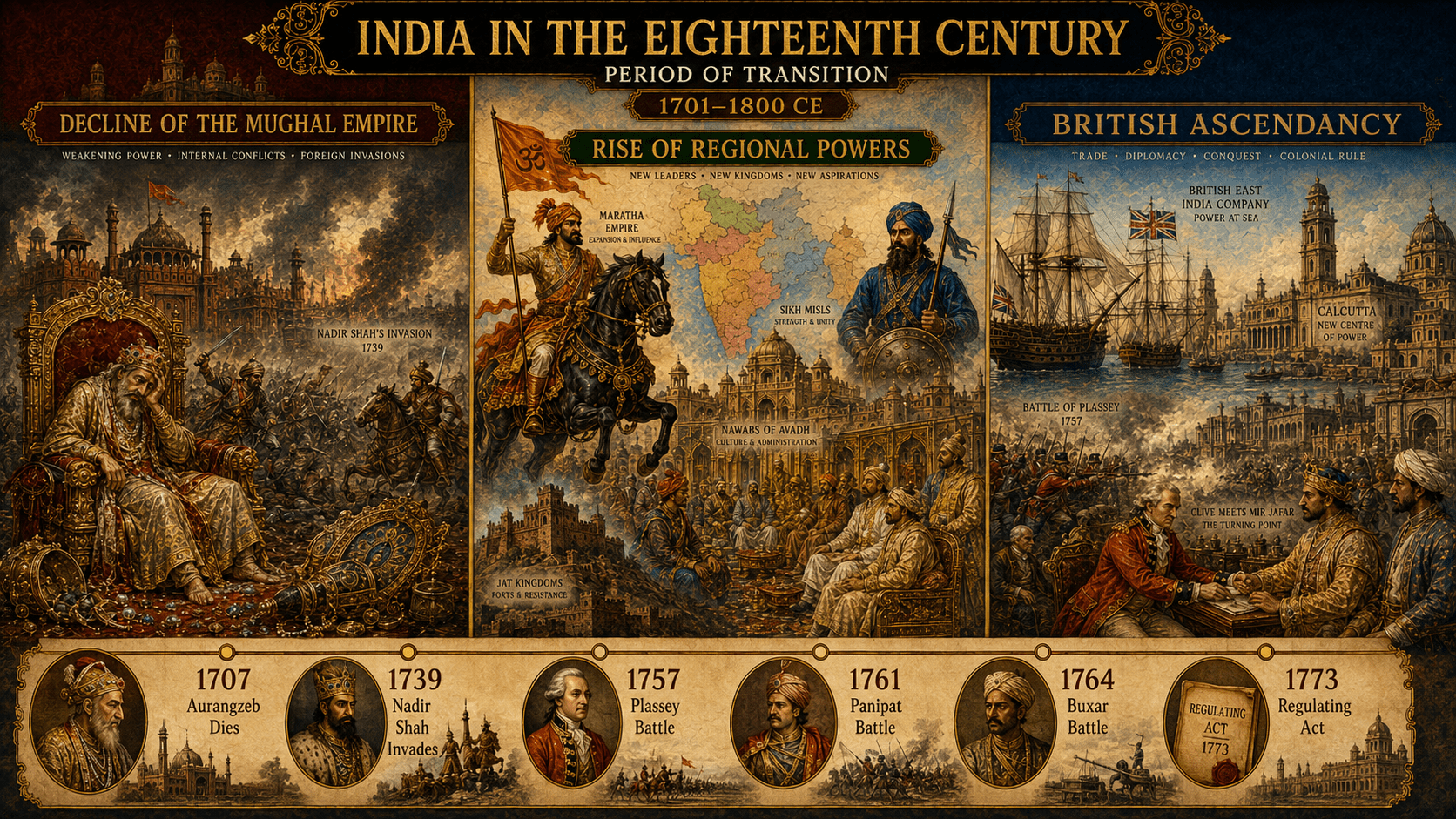
India in the Eighteenth Century: Period of Transition
Introduction: A Century of Political Transformation The eighteenth century (1701–1800 CE) marked a watershed period in Indian history, characterized by profound political transition…

Introduction: A Century of Political Transformation The eighteenth century (1701–1800 CE) marked a watershed period in Indian history, characterized by profound political transition…
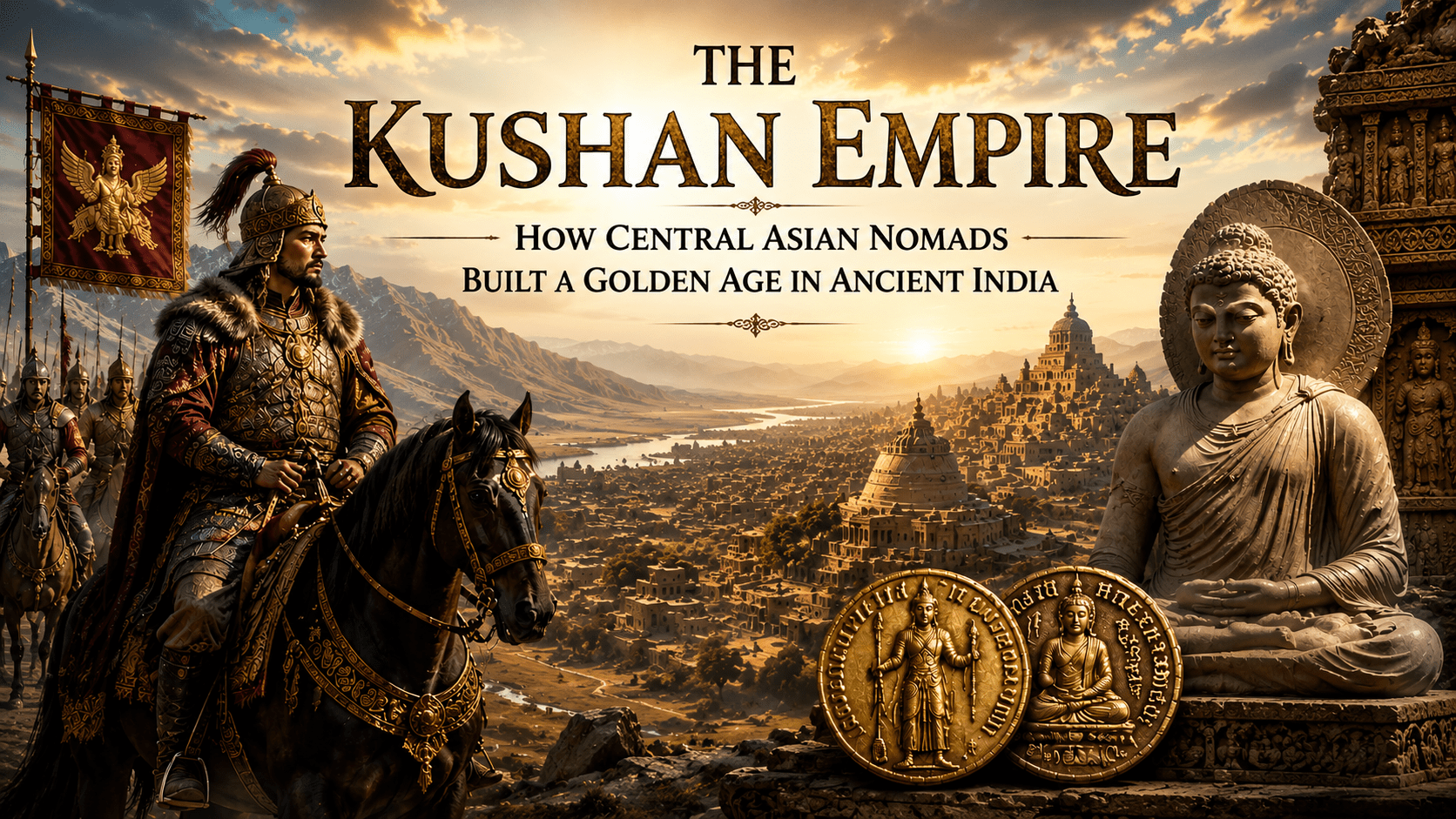
Kushan Empire: Kanishka’s Golden Age in Ancient India About 2,000 years ago, nomads from the Gobi Desert built an empire that stretched to…
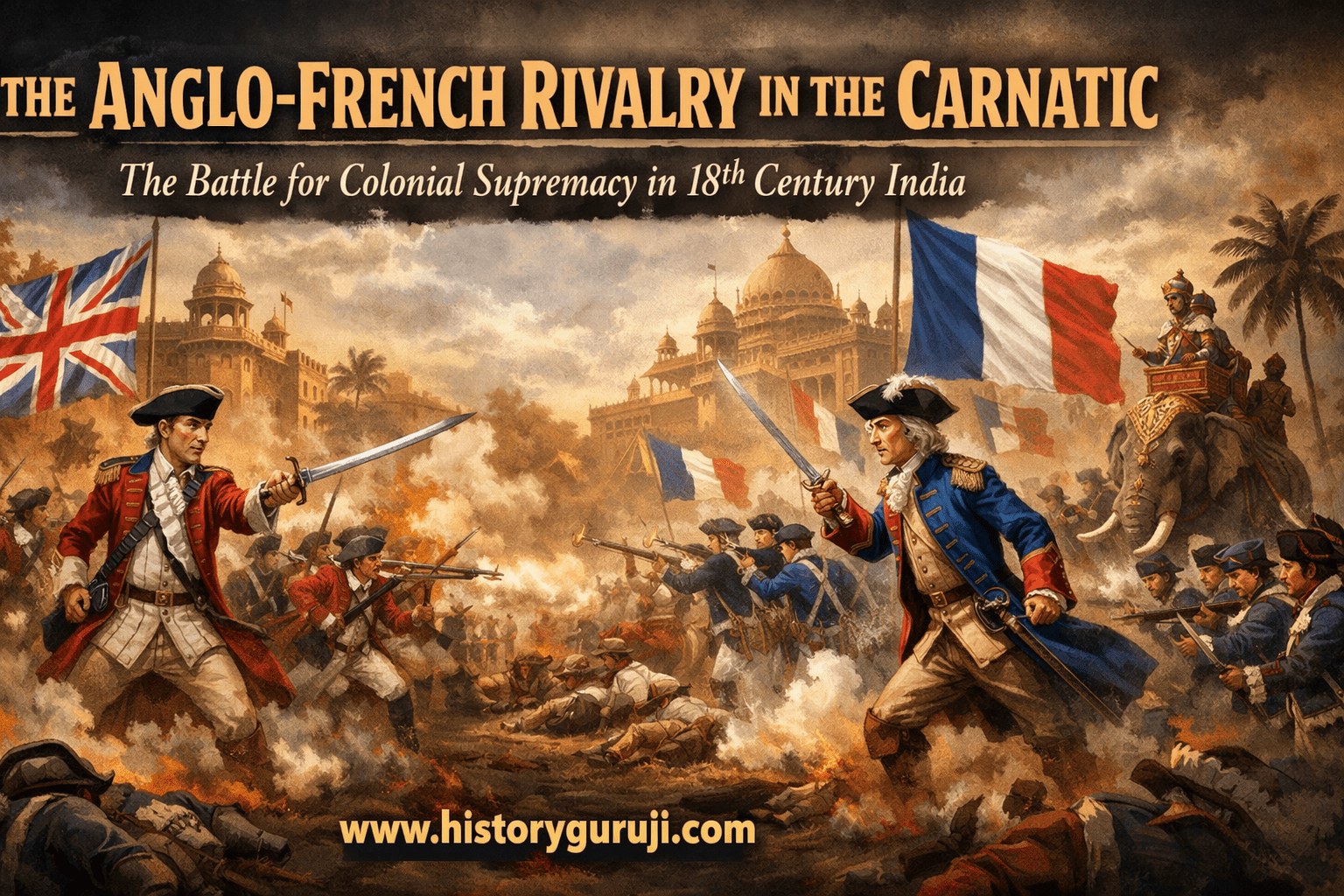
Introduction: European Powers Clash in Southern India During the 18th century, as Mughal power declined across the Indian subcontinent, a fierce commercial and…
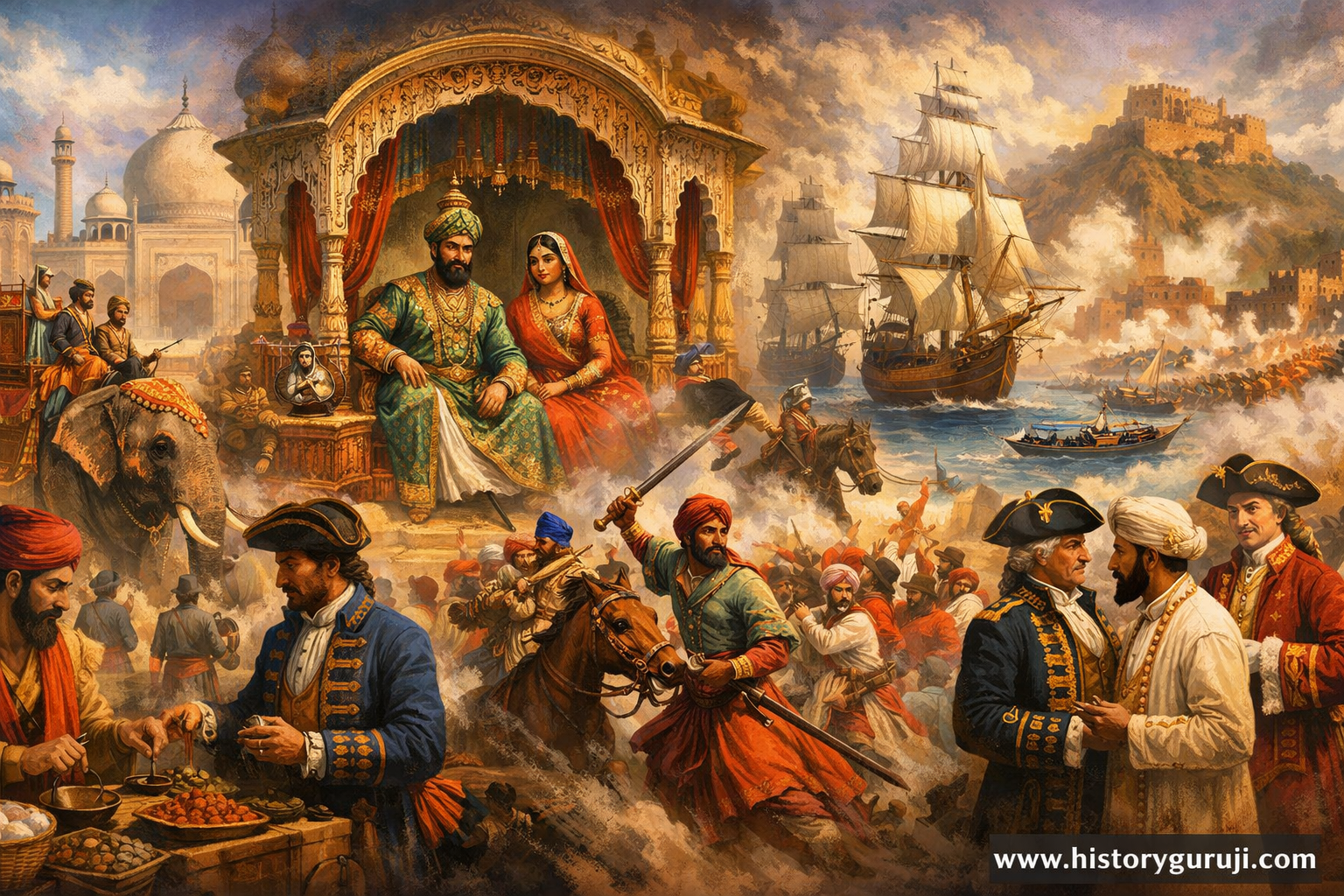
India in the Eighteenth Century Until recently, historians portrayed the eighteenth century in Indian history as a “dark age” characterized by widespread disorder…

The Later Mughal Emperors: India’s Long Decline (1707–1857) When the Mughal emperor Aurangzeb died in 1707, he left behind the largest and richest…
The Rise of European Competition in South India By the mid-eighteenth century, India was passing through an extraordinary period of historical transition. In…
Preface A Defining Moment in India’s social History Many events in India’s independence struggle carry as important moral weight and political complexity as…
In 1930, a 61-year-old man walked 241 miles to the sea to pick up a handful of salt — and shook the foundations…
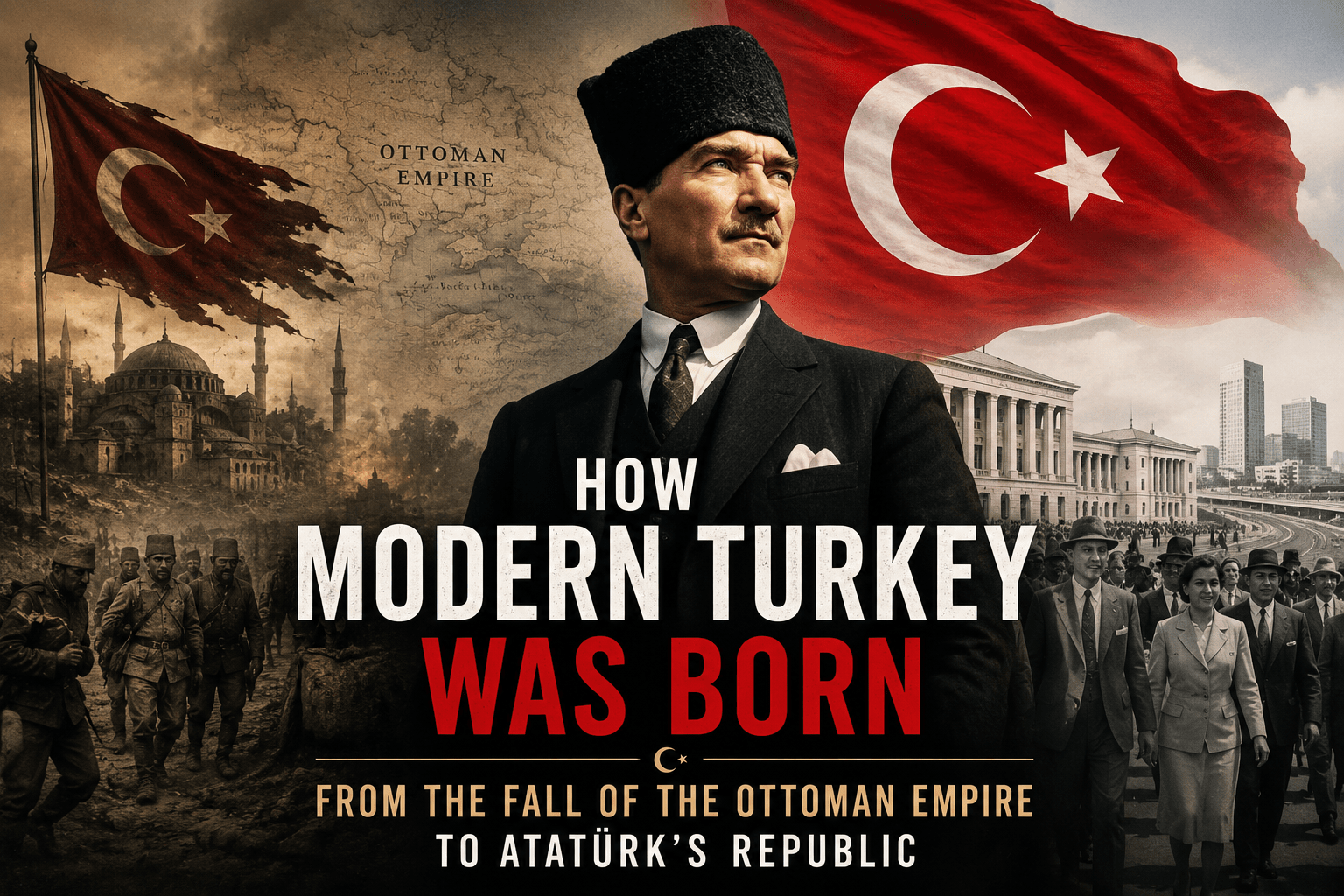
The story of modern Turkey is really the story of one empire collapsing and a completely new nation rising from its ashes. It’s…
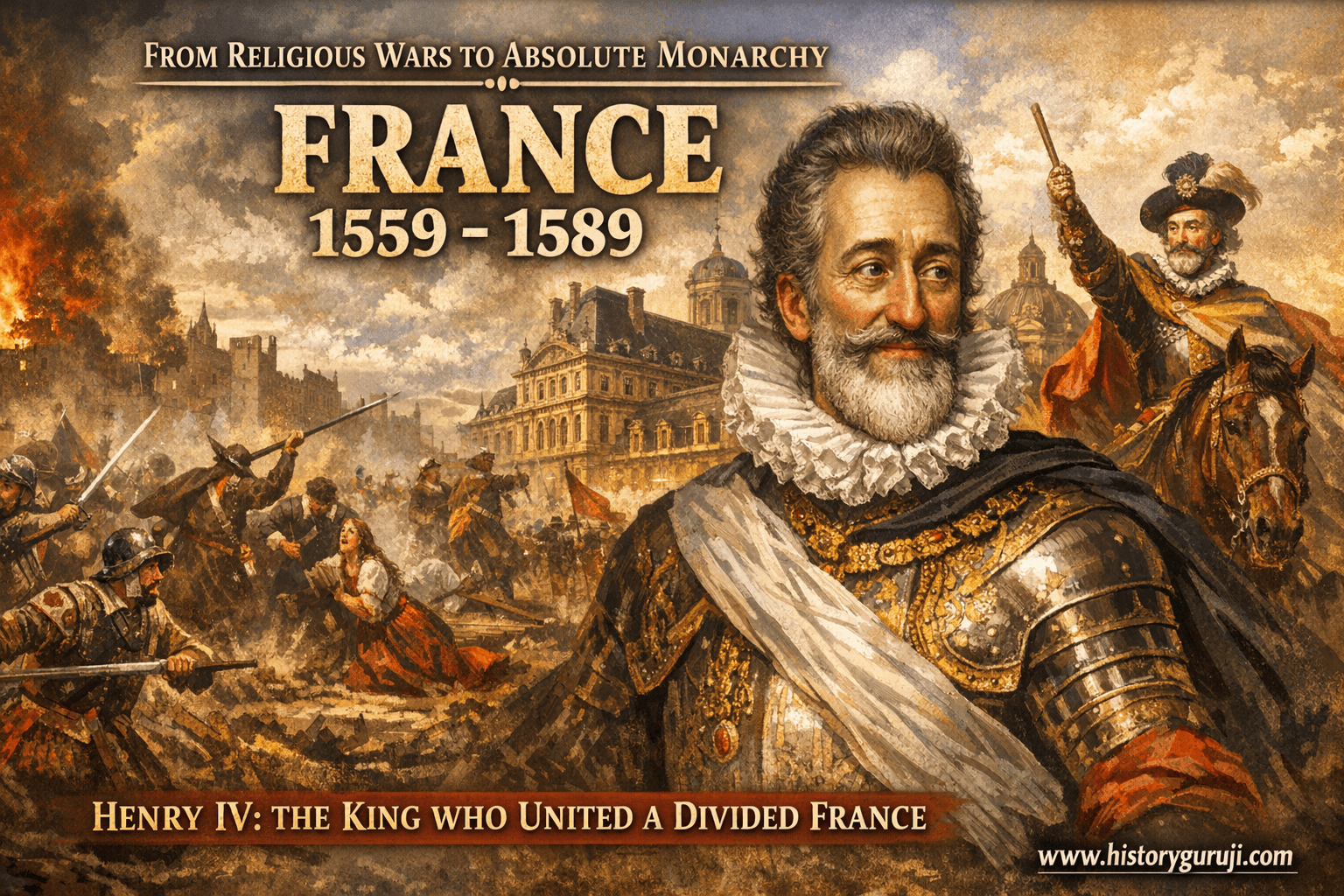
Introduction: The Birth of French Absolute Monarchy The 15th century witnessed the establishment of absolute monarchy in France, but it was the turbulent…

Mesopotamian Civilization: The Cradle of Human Progress The history of human civilization after the Stone Age witnessed the successive arrival of the Copper…
Preface A Defining Moment in India’s social History Many events in India’s independence struggle carry as important moral weight and political complexity as…
In 1930, a 61-year-old man walked 241 miles to the sea to pick up a handful of salt — and shook the foundations…

Meaning of the Renaissance The term “Renaissance” literally means rebirth or revival. It refers to the intellectual, artistic, cultural, and scientific transformations that…

After the failure of the Great Revolt of 1857, the East India Company’s rule in India ended, and the British government attempted to…

Explore the 1857 Revolt, known as India’s First War of Independence, its major causes including economic exploitation, religious interference, and political annexations, key…

The establishment of British rule in India was not merely an event, but the result of a long process of colonizing the Indian…

The Life of Timur Timur, also known as Taimur Lang or Timur (1336–1405 CE), was a cruel and ambitious military ruler of the…

The Tughlaq Dynasty (1320-1414 CE) marked a significant era in the Delhi Sultanate, known for ambitious reforms, military conquests, and eventual fragmentation. Founded…

The Khilji Dynasty was the second ruling family of the Delhi Sultanate. This dynasty was founded by Jalaluddin Khilji, who began his life…

The establishment of the Delhi Sultanate was a pivotal event in Indian history. As a result of the religious and political changes following…

The Indus Valley Civilization, also known as the Harappan Civilization, stands as one of the world’s oldest river valley civilizations. It flourished along…